Why your heart never beats the same way twice
By God's Closet
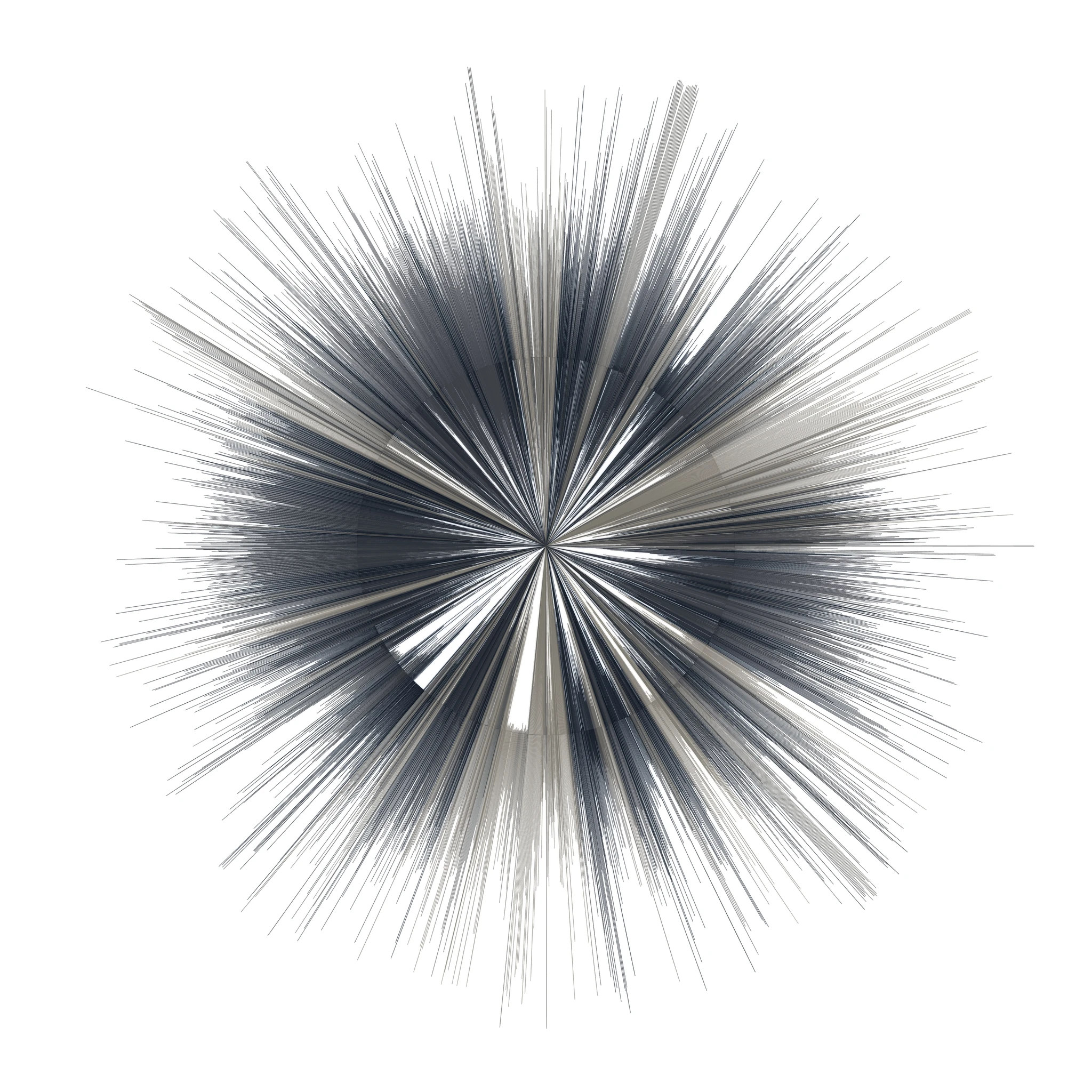
If your heart beats sixty times a minute, it is easy to picture exactly one second between each beat. In reality, the gap varies from beat to beat: nine hundred and forty milliseconds, then a thousand and ten, then nine hundred and eighty. Those gaps between beats are the information that matters.
Two nerve pathways regulate the heart
Heart rhythm is governed by two opposing branches of the autonomic nervous system, the part of the nervous system that runs on its own. One branch speeds the heart up, the other branch slows the heart down, and both branches act all the time.
At any instant, the rhythm you observe is the balance between these two branches. The heart continuously receives two contrary influences, and their balance keeps shifting. That shift produces the irregularity of the beats.
Breathing shows up in the heartbeat
There is one variation anyone can observe on themselves. Heart rhythm speeds up slightly on the in-breath and slows down on the out-breath. The phenomenon has a name, respiratory sinus arrhythmia, and it is more pronounced the slower and deeper the breathing.
A heartbeat recording therefore also contains the trace of a person’s breathing. A calm conversation and a heated conversation are breathed differently, and the difference reads in the gaps between beats before it reads in their count.
What changes variability
Variability changes with almost everything that happens in a day.
- Body position: lying down, sitting, standing, the values are not comparable.
- Time of day: variability follows a cycle over twenty-four hours, with a trough and a peak.
- Last night’s sleep, yesterday’s exercise, a meal, alcohol.
- Age: variability drops slowly and steadily over the years, in everyone.
A capture is therefore read against itself: what matters is how the rhythm moves during the half hour, from the first minute to the last.
What half an hour contains
The arithmetic is simple. At seventy beats a minute, half an hour produces a little over two thousand beats. Each beat is separated from the next by a gap: a thirty-minute capture therefore contains roughly two thousand gaps between beats, all different.
Two thousand gaps are plenty to compose an artwork: they draw a dense shape and bring out the moments where the rhythm shifts.
The guide sets a minimum of ten minutes of capture: ten minutes give enough beats to compose a complete artwork.
The emotional imprint
Each variation in the rhythm is a reaction of the body. An acceleration can come from a feeling, a memory, a sip of coffee, a change of posture, or a sentence you are about to say.
During a capture, the smart ring records only the heartbeats. The smart ring measures the change in blood volume under the skin of the finger, about twenty-five times a second: with each beat, the blood slightly swells the vessels of the finger. What gets said during the capture stays between the people present, and the artwork keeps the emotional imprint of that moment.
What an Arsentis artwork shows
An Arsentis composition represents how the rhythm moves: the moments where the rhythm climbs, the moments where the rhythm settles, and the steady ground between them, which stays black. The signal is cleaned, then cut beat by beat. Each beat becomes a line: the length, position and colour of the line depend on what the heart was doing at that precise instant. The artist then composes the lines according to the chosen artwork, adjusts the balance and density, and prints the artwork.
Each artwork is therefore unique: each person produces their own sequence of gaps, and that sequence changes with every capture.